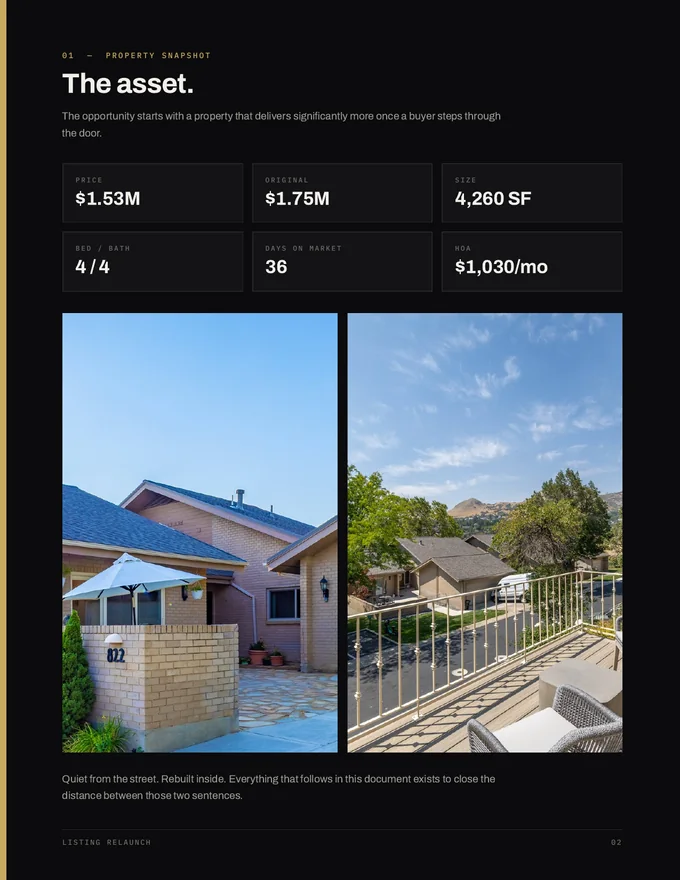
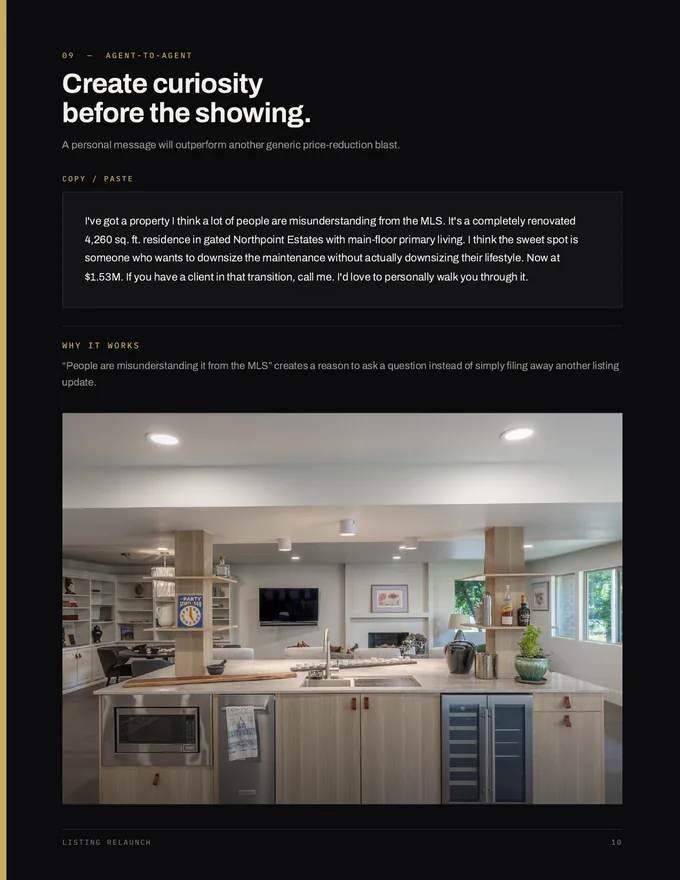
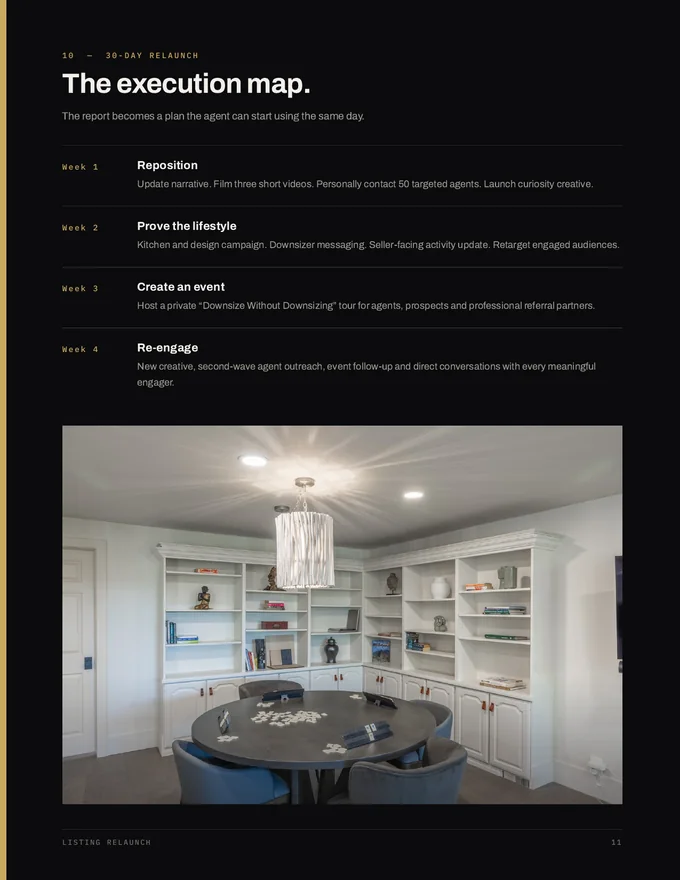
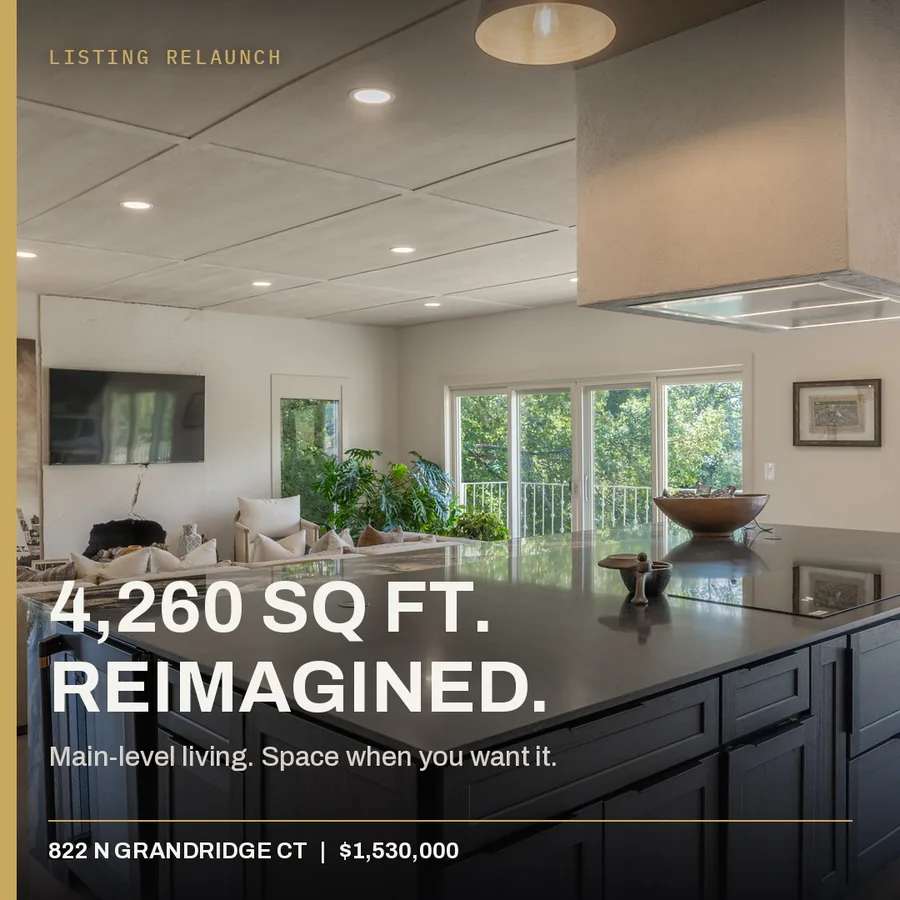
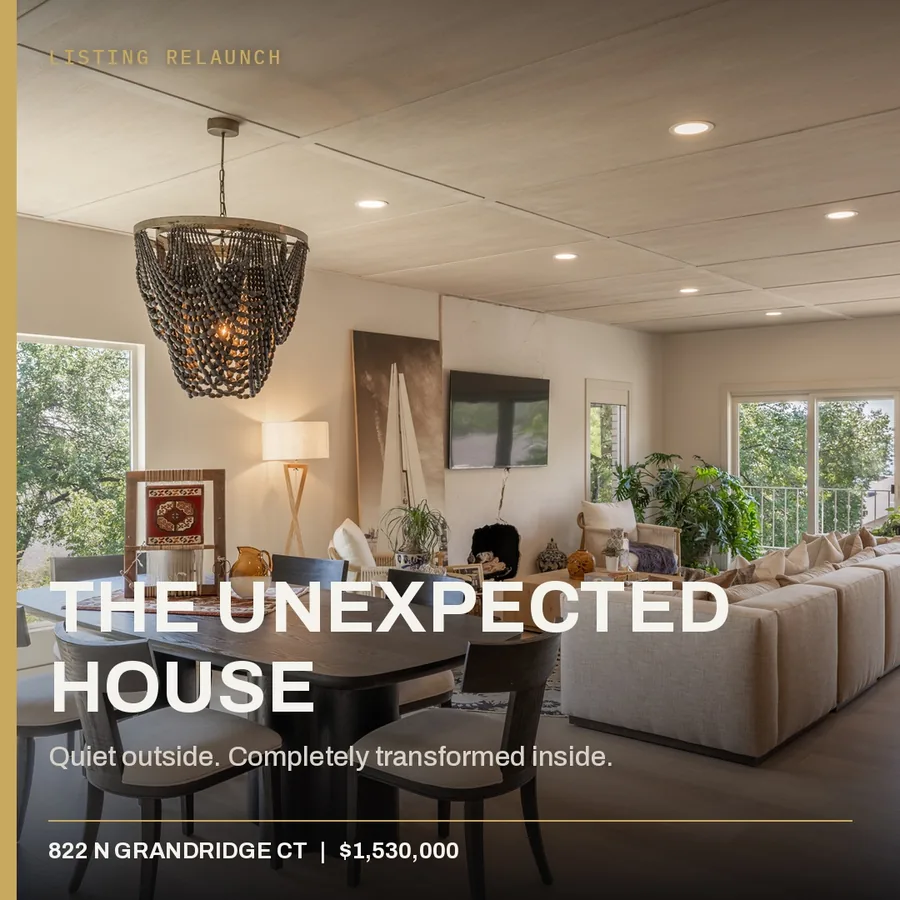
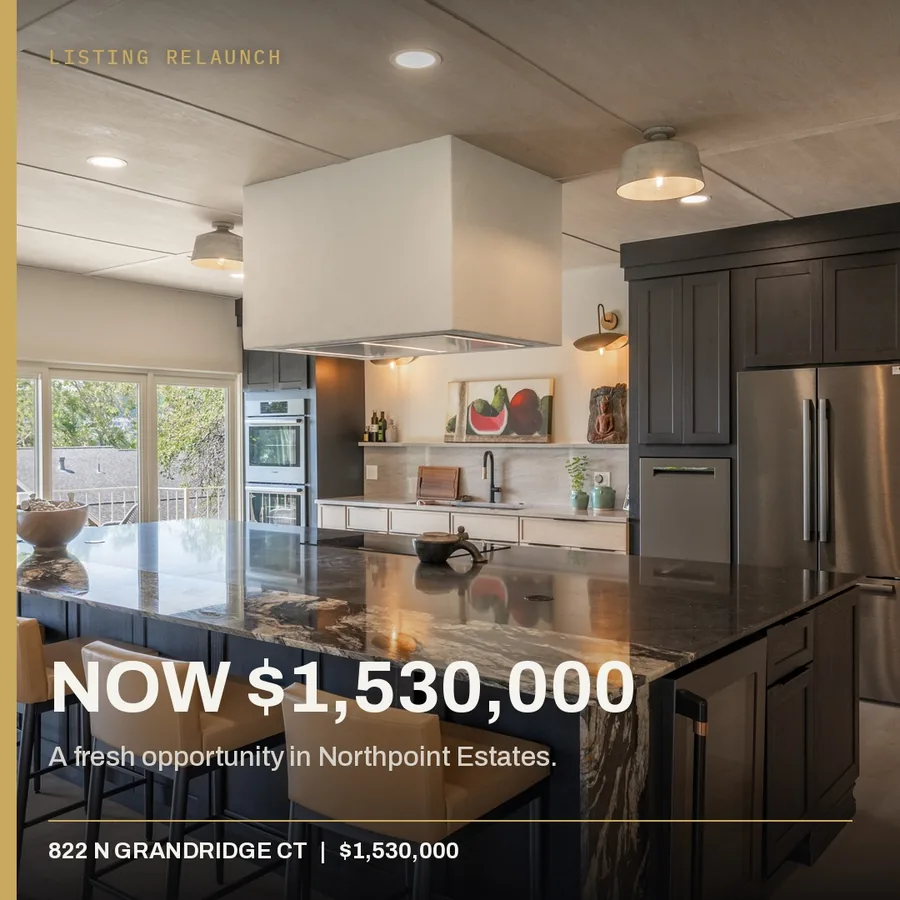
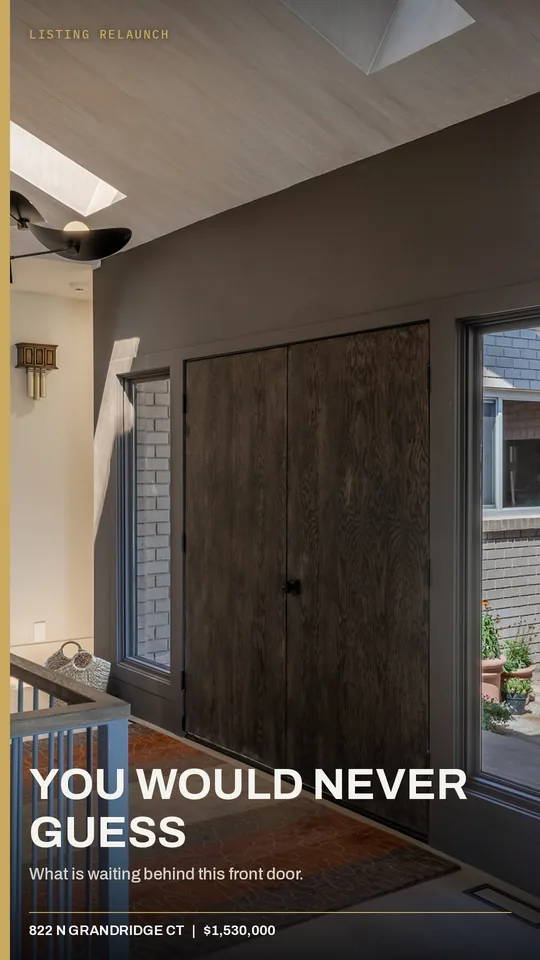
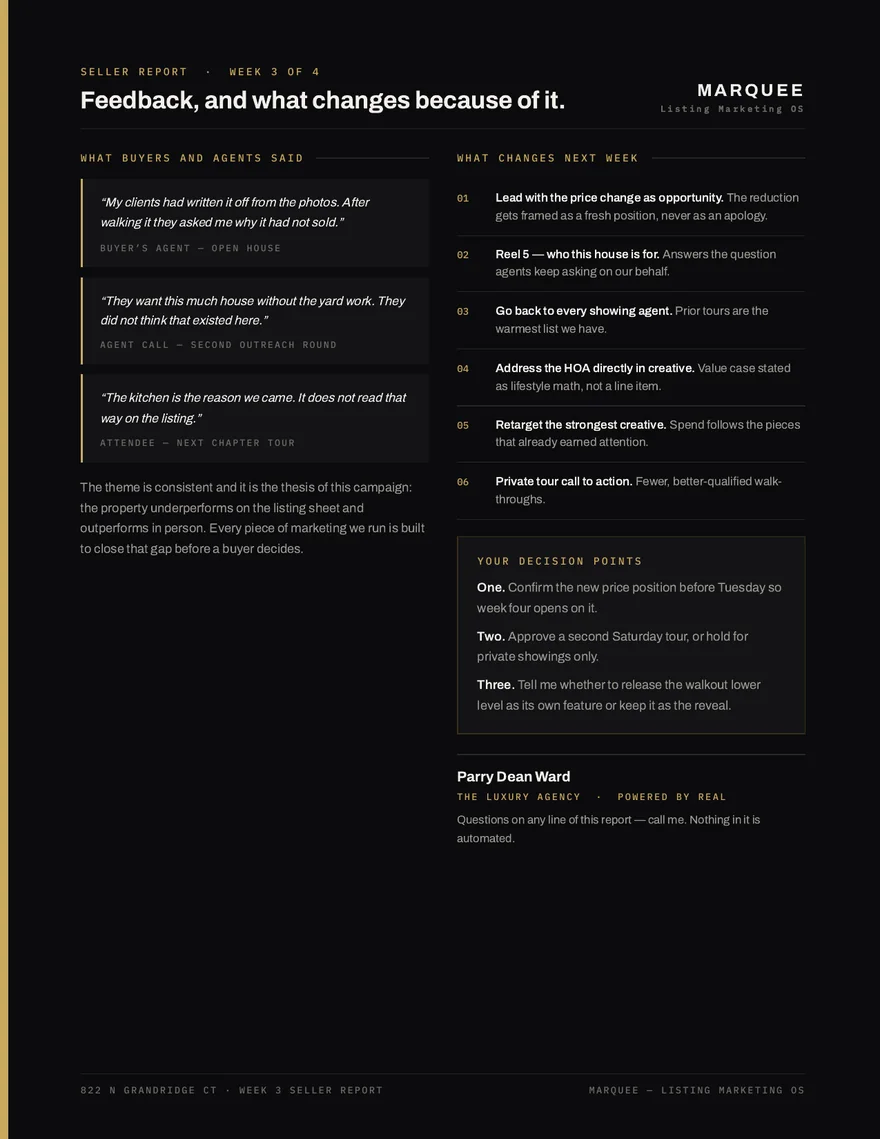
This is a real Marquee campaign, produced end to end for one property. Not a mockup, not a template with the address swapped out — the actual strategy, creative and calendar that went out. Everything below came from one intake.
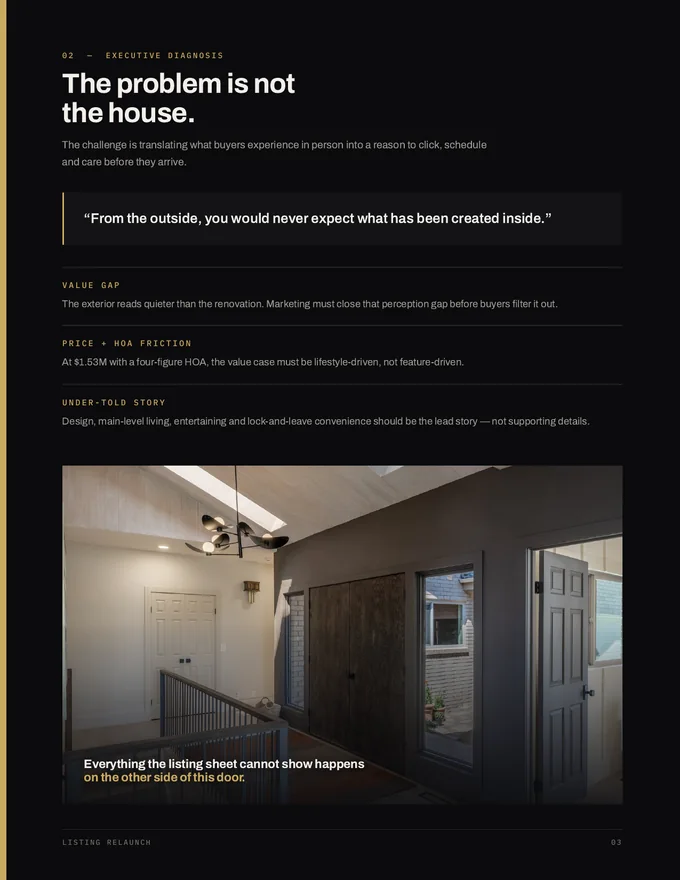
Thirty-six days on market with no offer is a marketing problem before it is a price problem. The campaign starts by naming what is actually going wrong — in writing, to the seller — because you cannot fix a story you have not diagnosed.
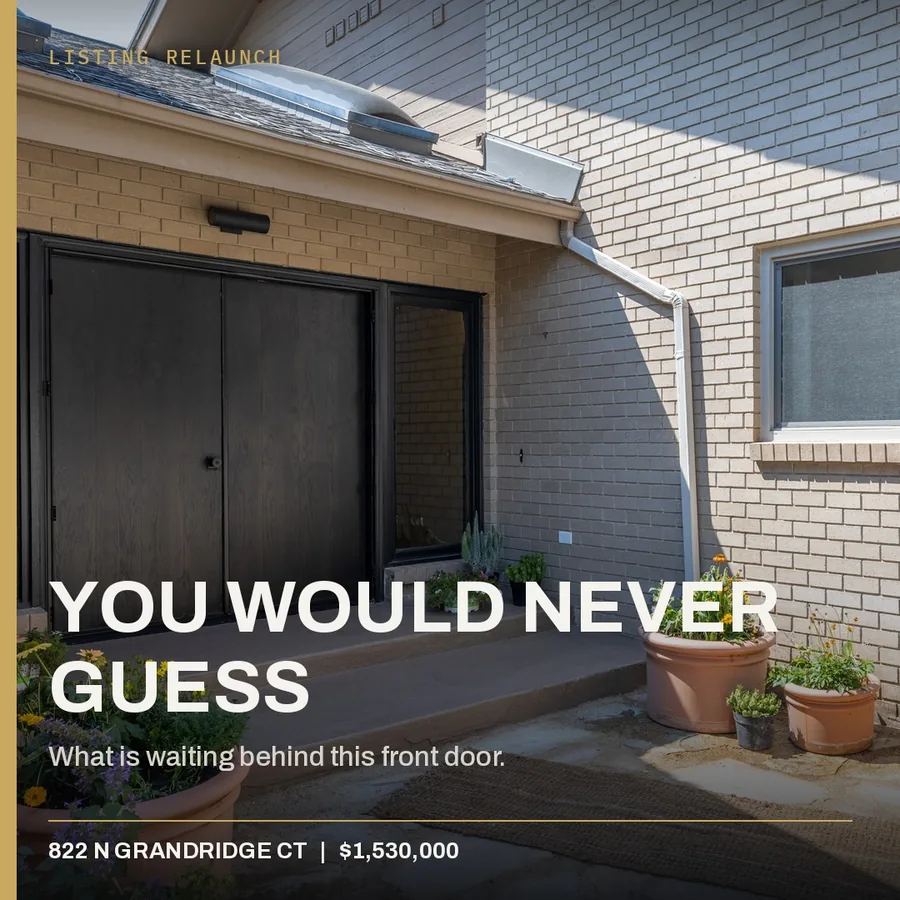
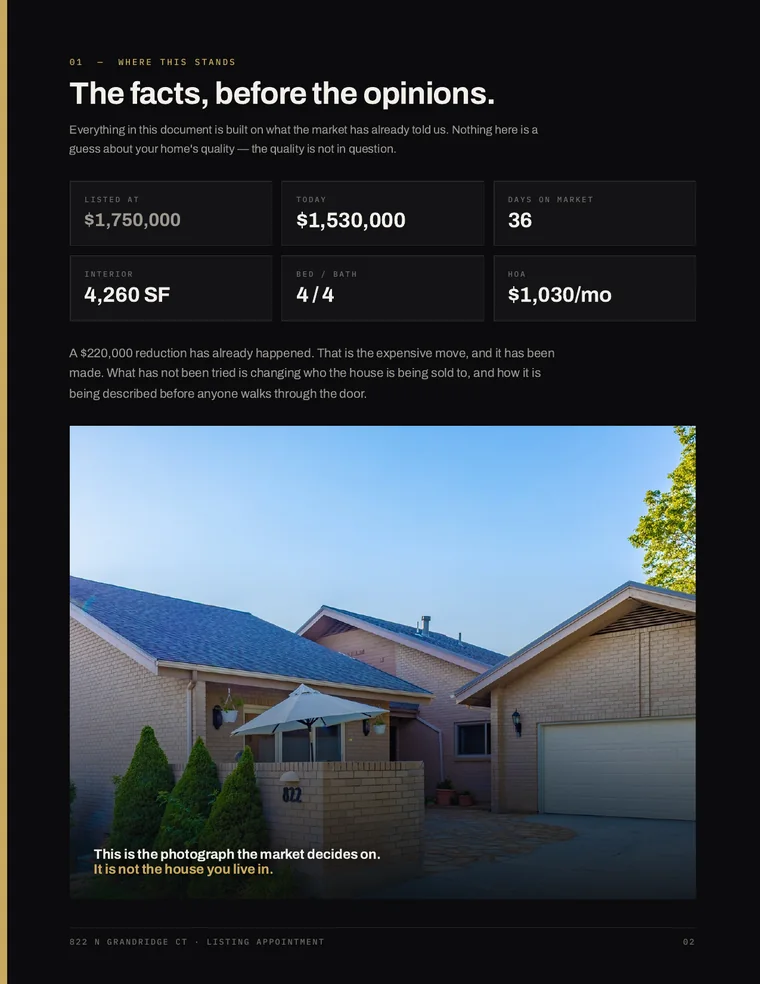
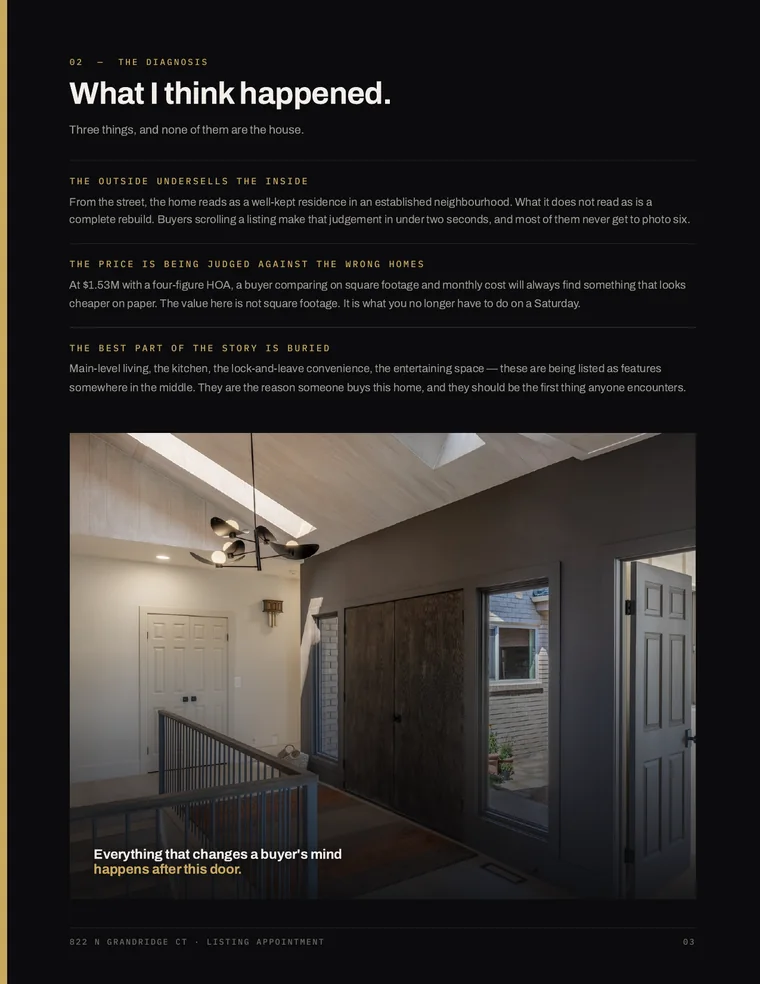
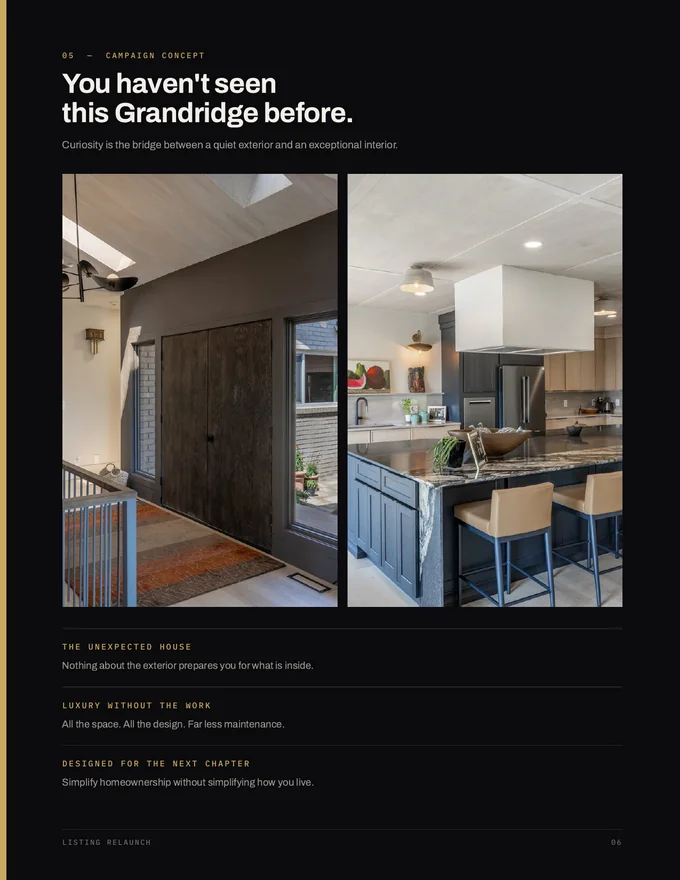
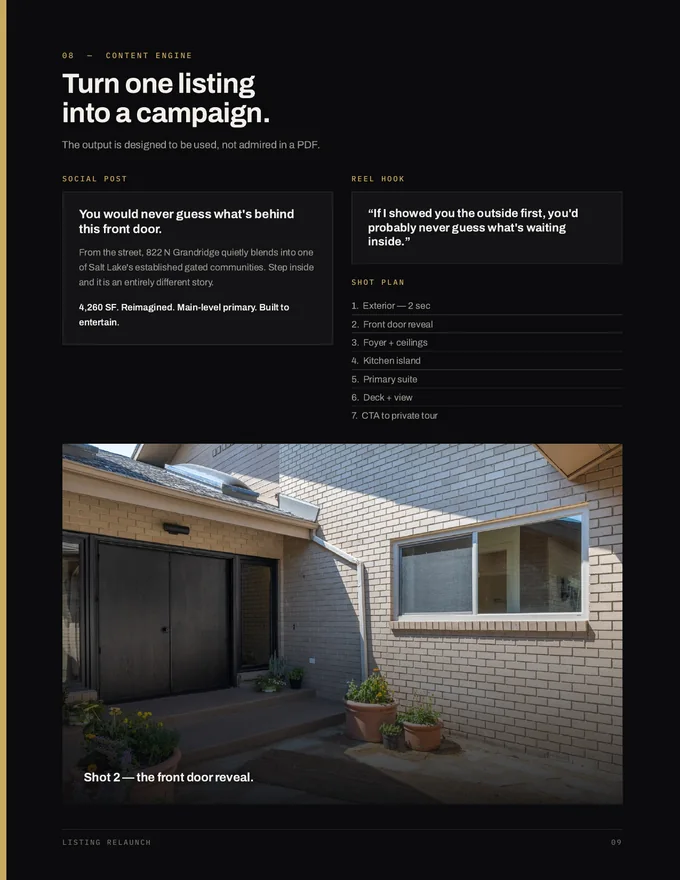
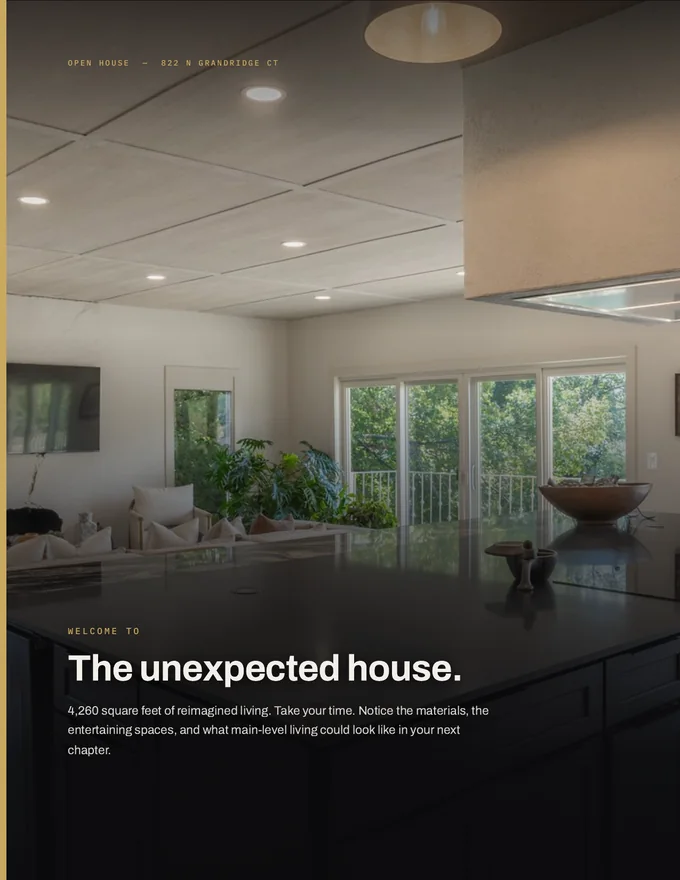
From the outside, you would never expect what has been created inside.
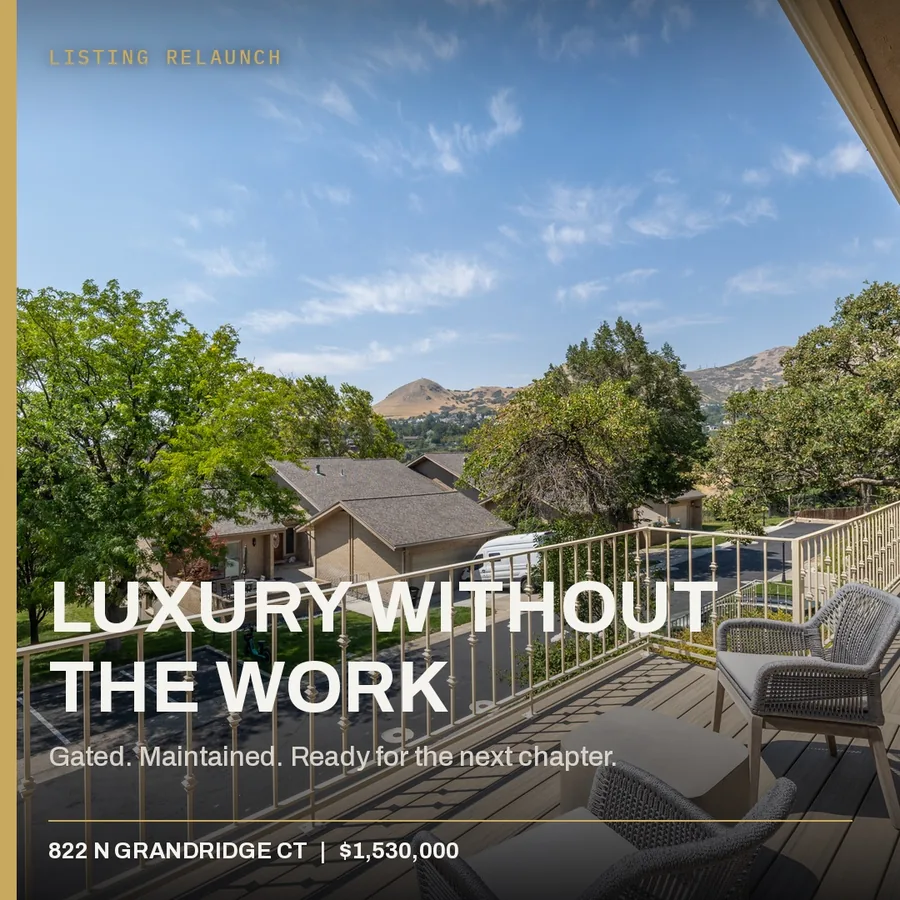
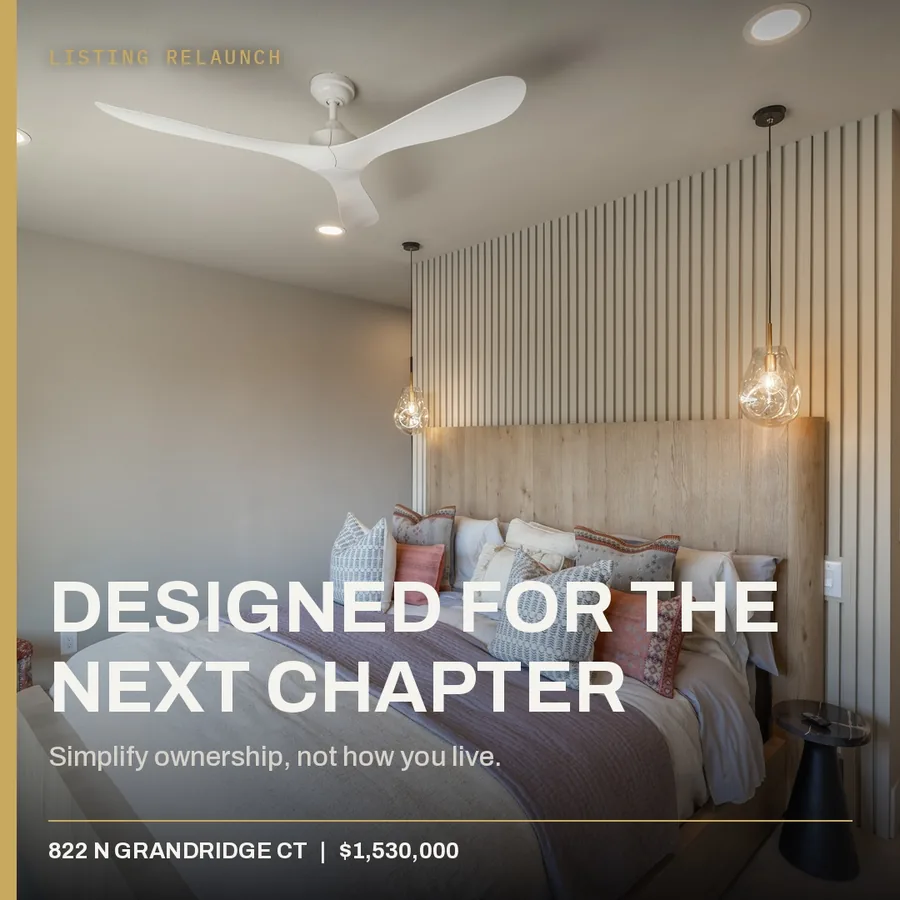
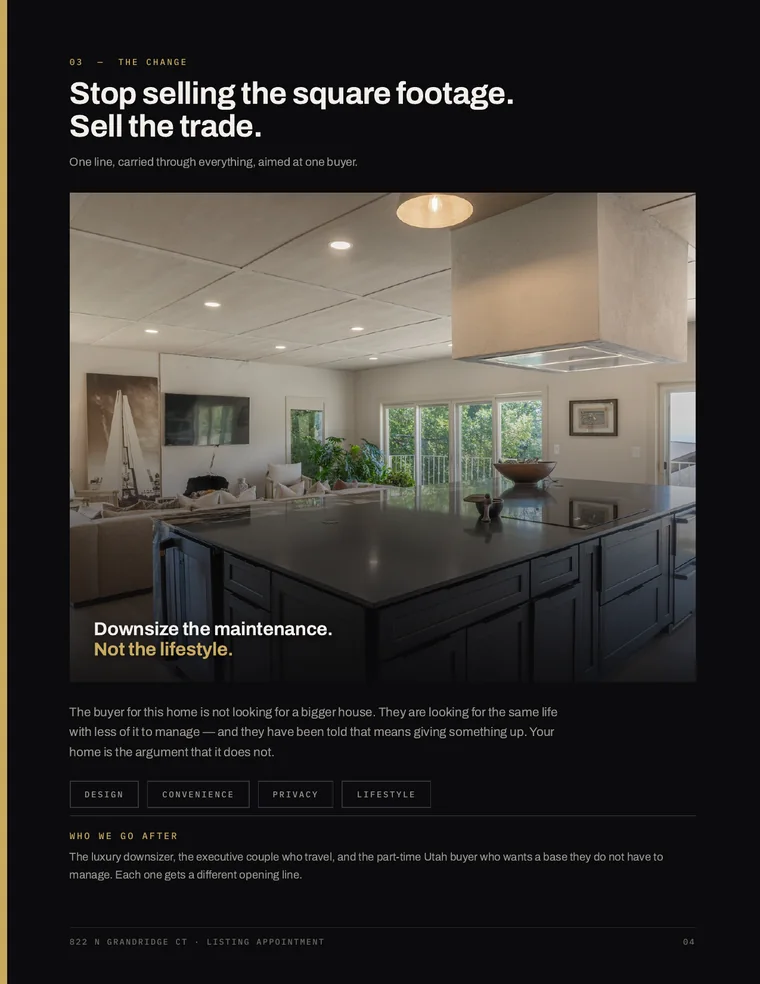
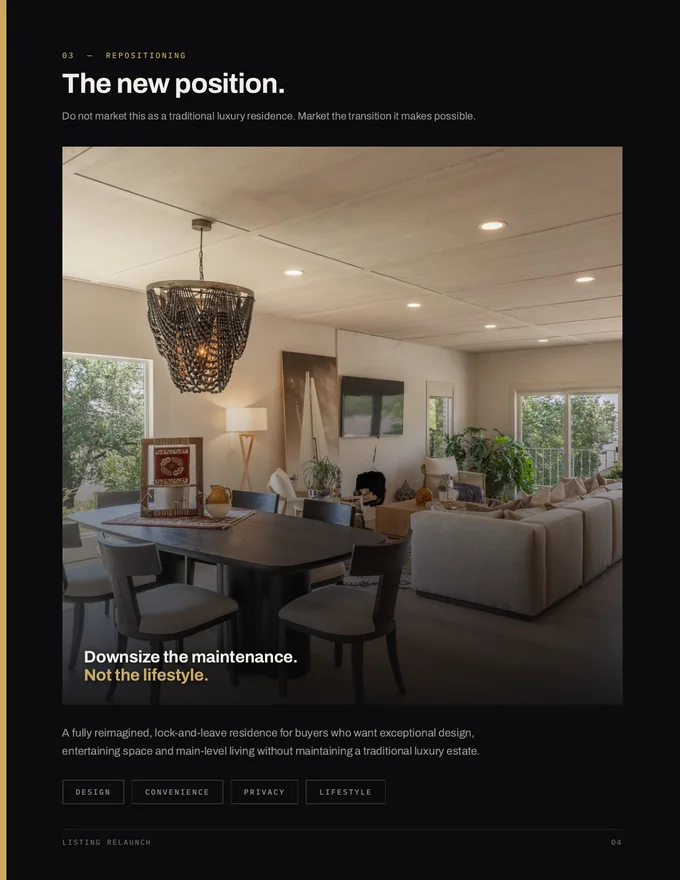
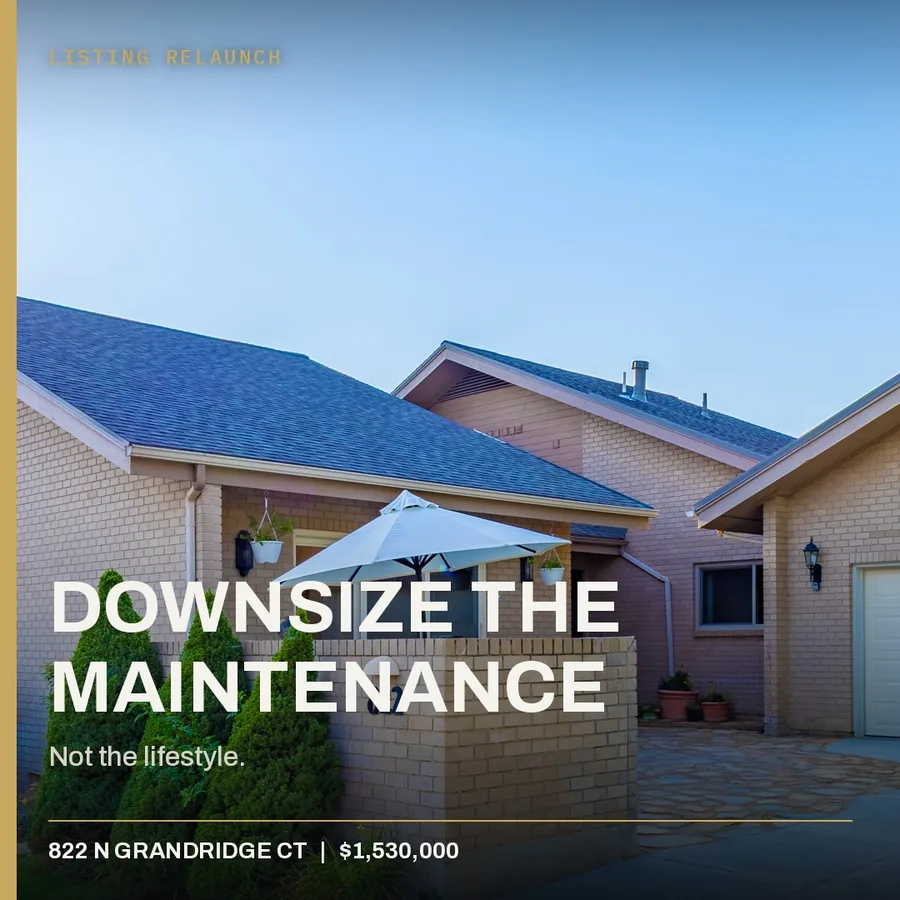
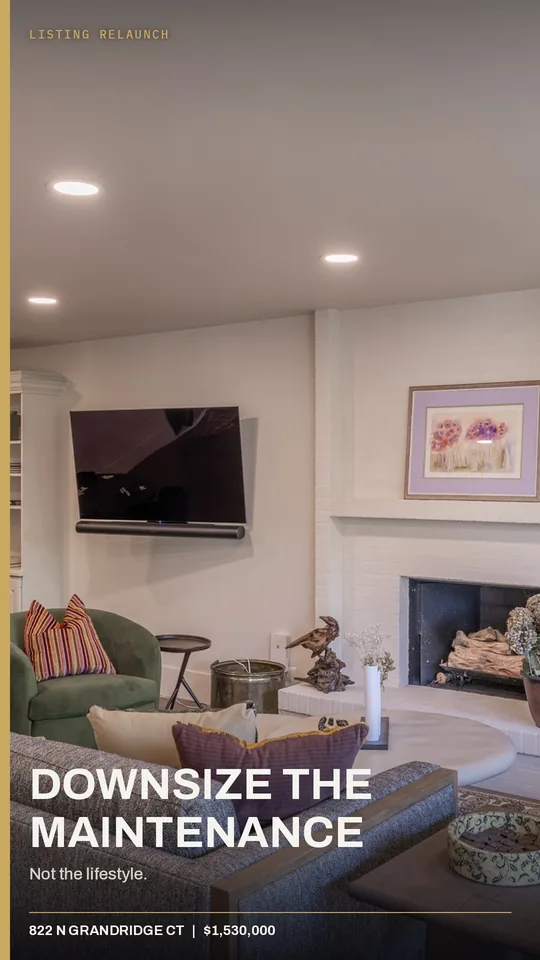
Most people do not actually want a smaller life. They want less maintenance, less yard work and less hassle — while keeping the space, quality and entertaining they love.
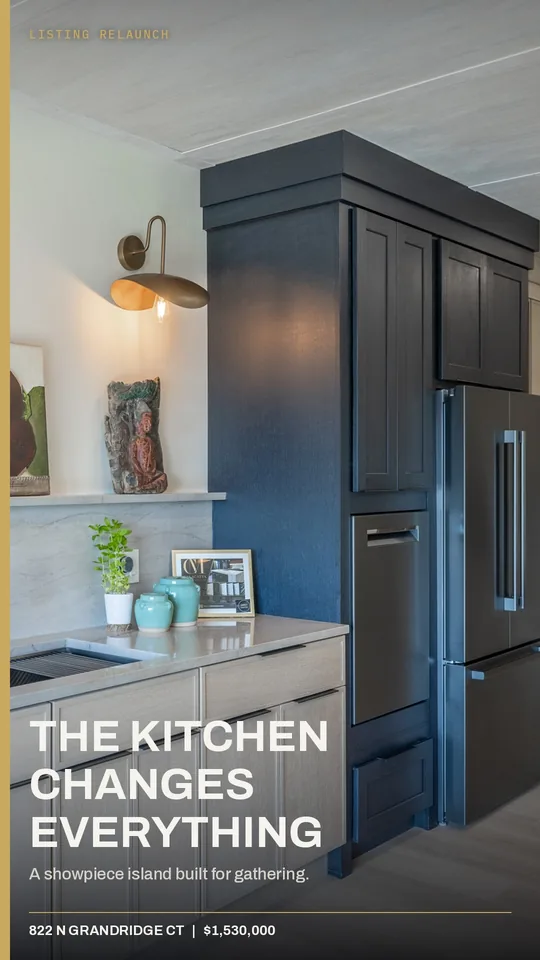
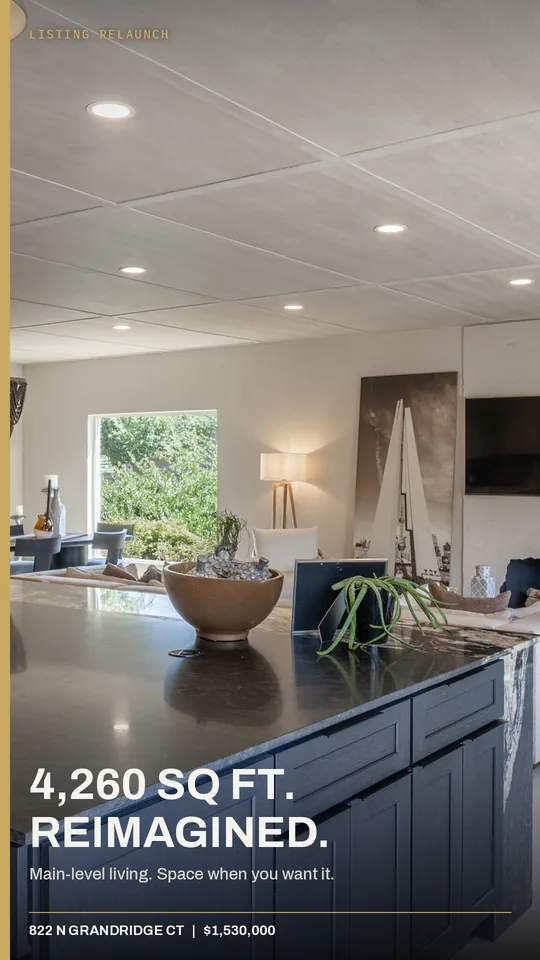
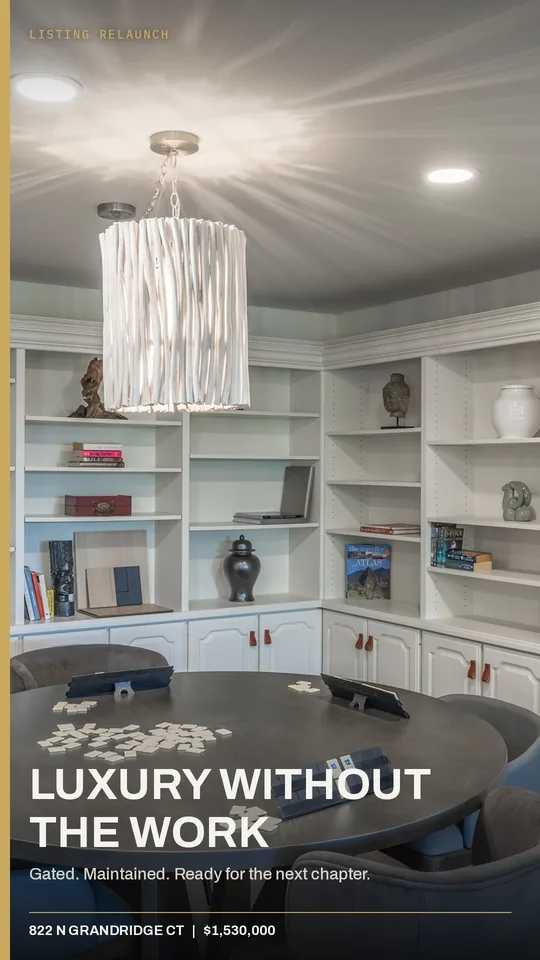
One line. Every asset below is built from it — the posts, the reels, the flyer, the open house invitation, the agent outreach. That is what makes a campaign feel like one campaign instead of fourteen unrelated pieces.
Nothing was re-shot and nothing was staged again. The only thing that changed is what the market was handed — and that is the entire product.

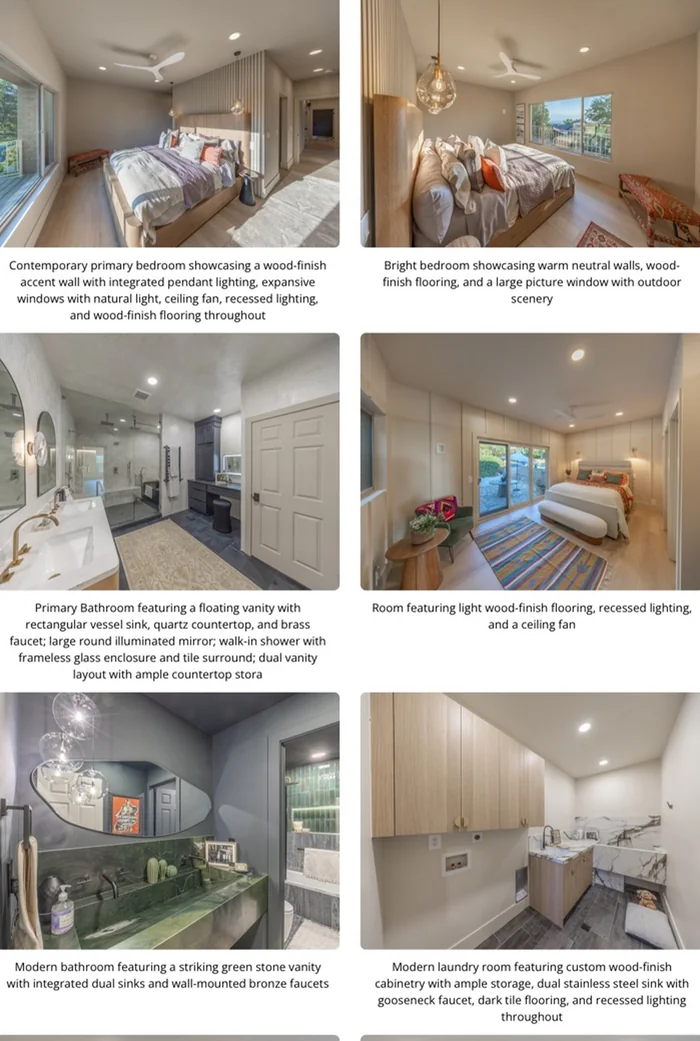
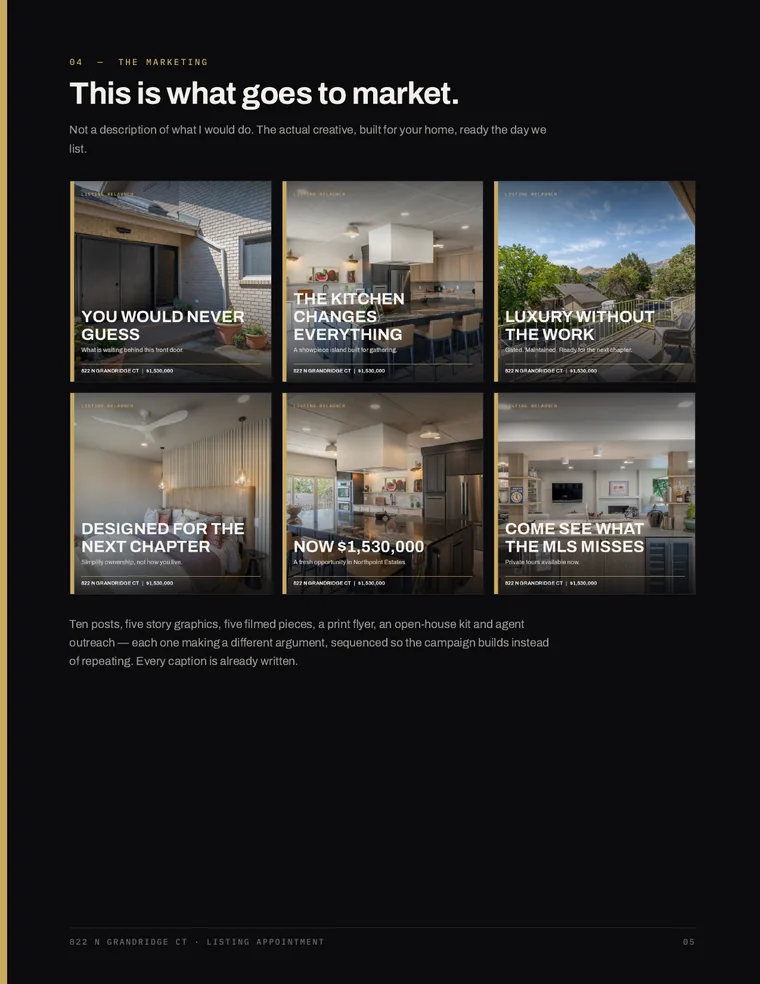
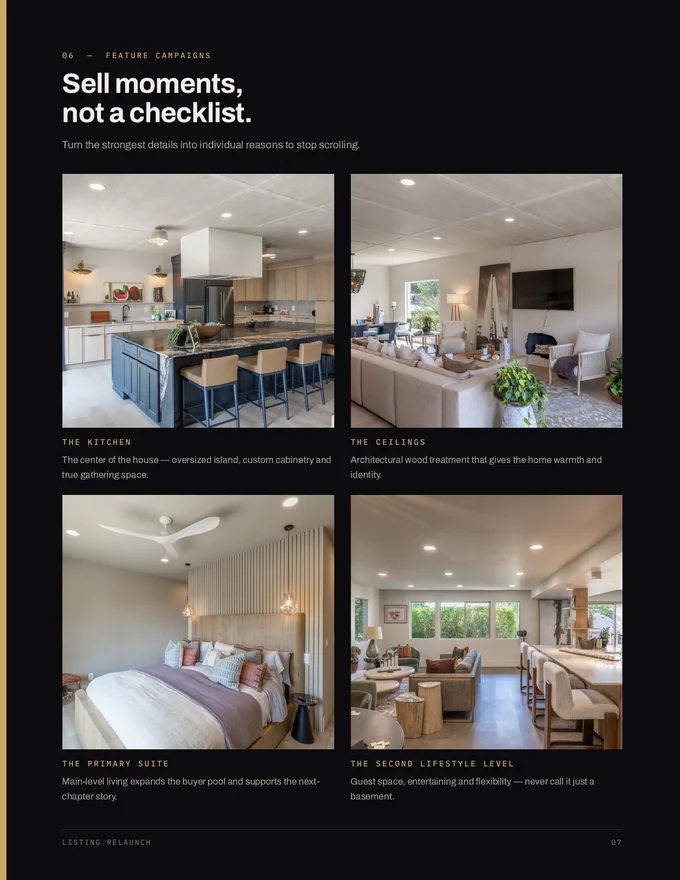
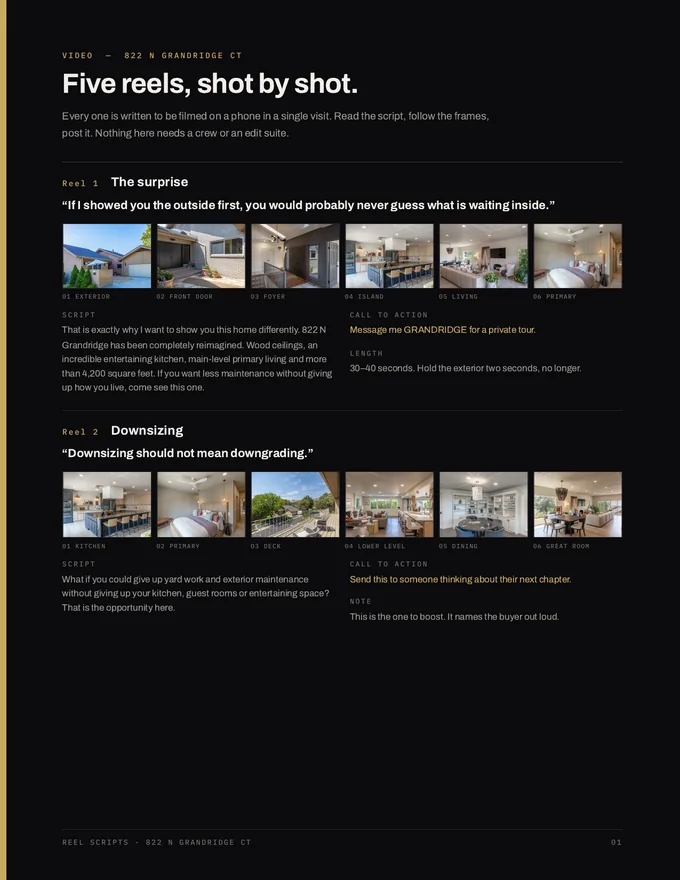
“Room featuring light wood-finish flooring, recessed lighting, and a ceiling fan.”
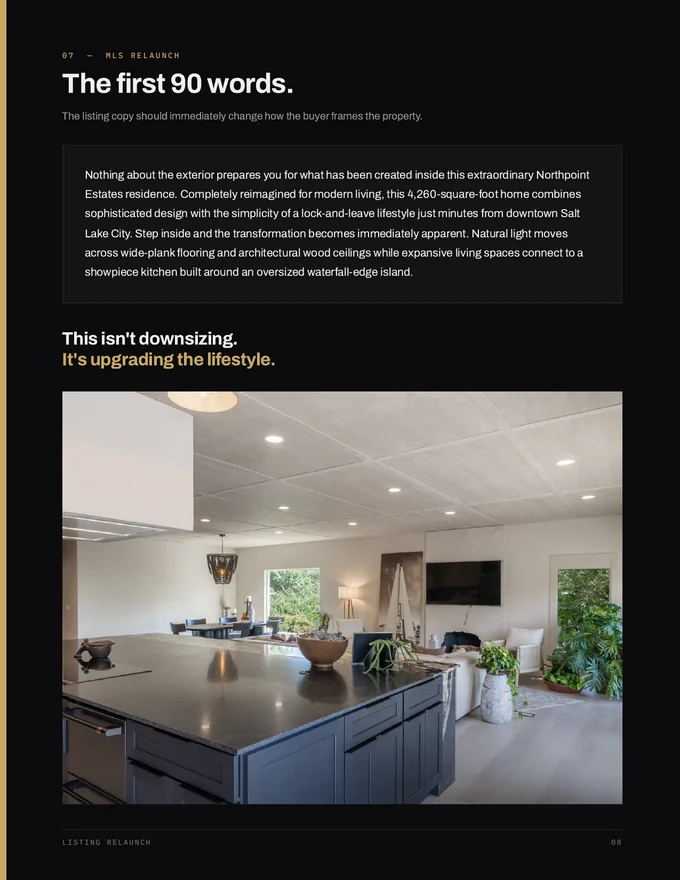
“Nothing about the exterior prepares you for what has been created inside this extraordinary Northpoint Estates residence.”
A $220,000 reduction had already been tried. This is what had not been.
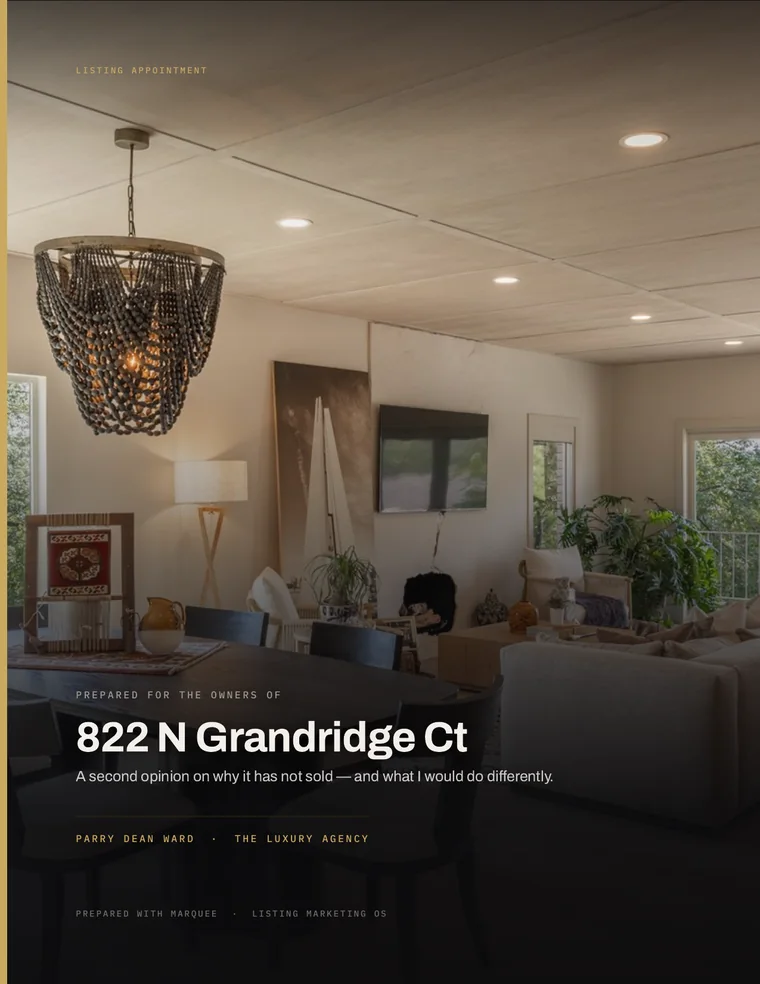
Finished, art-directed, ready to post and print. Every piece below existed before the agent did anything except approve it.
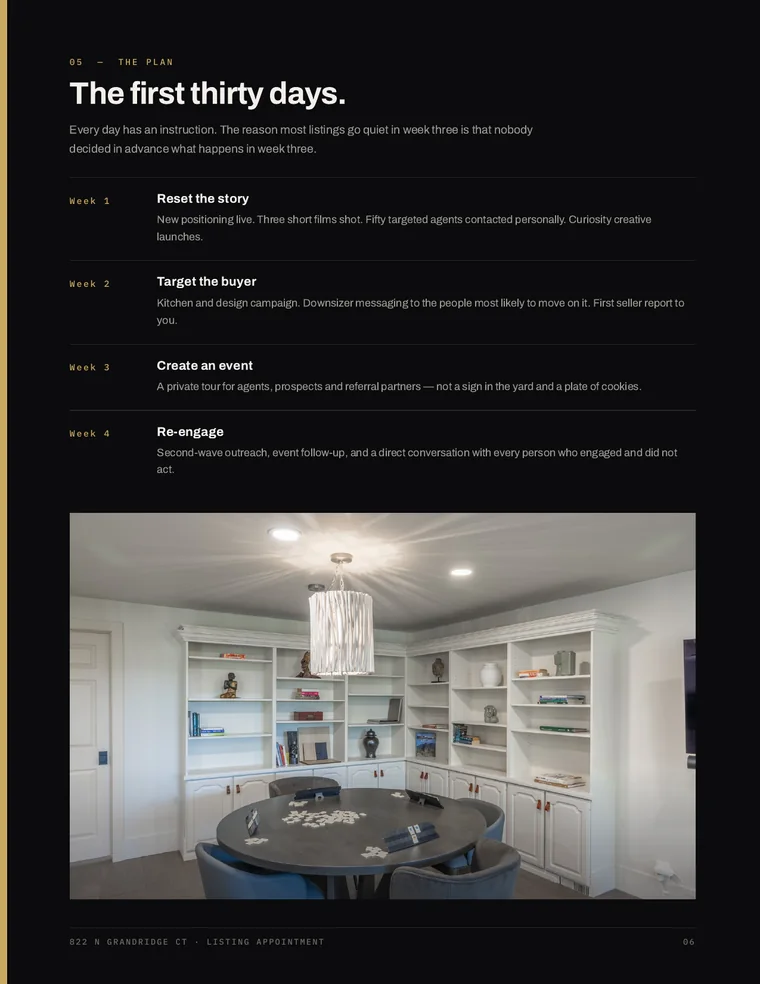
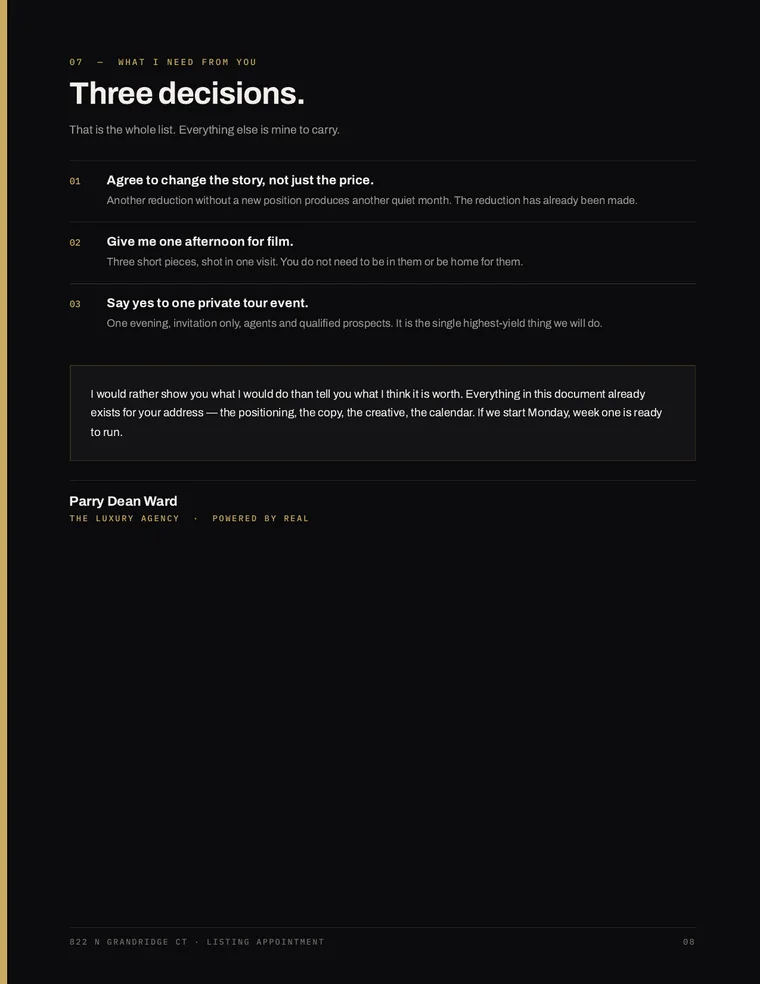
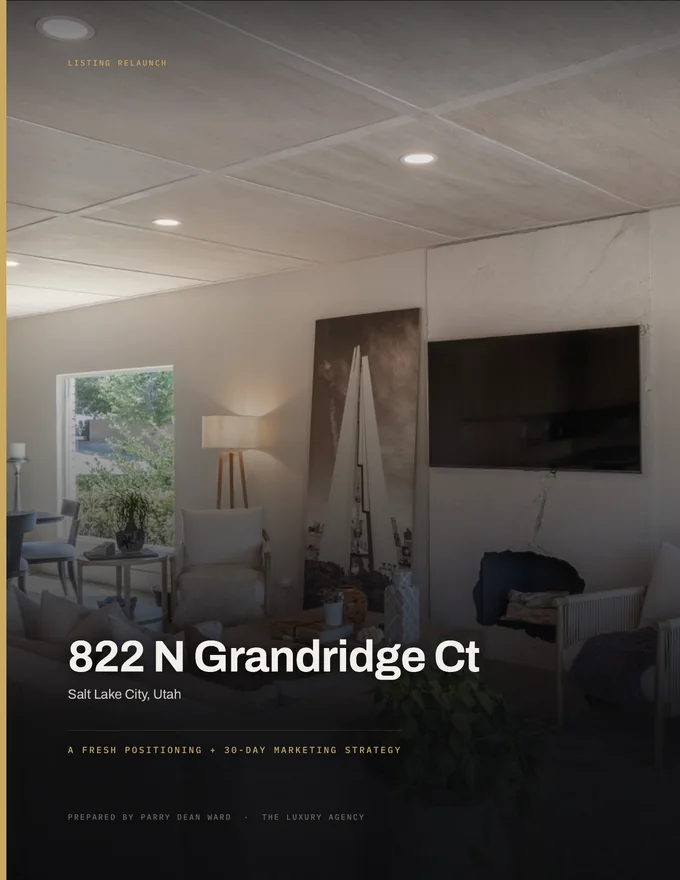
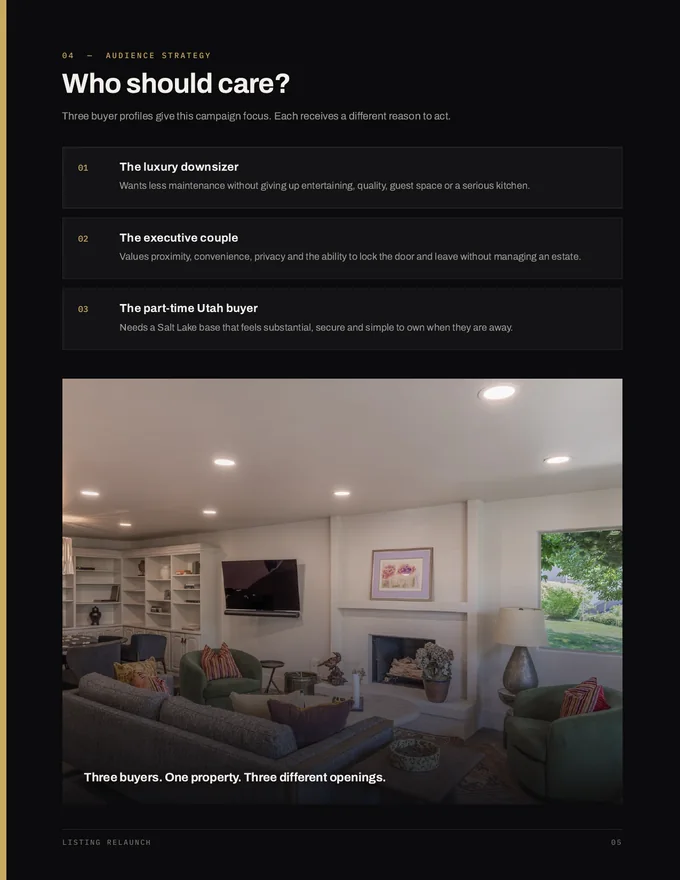
Everything further down this page happens after the seller signs. This is the part that comes first — the document you carry into the appointment, built for that specific address, against whoever else is interviewing that week. Eight pages: what the market has already said, why it has not sold, what you would change, the creative that goes live the day you list, the thirty-day plan, how the seller will be kept informed, and the three decisions you need from them.
This is what the free run produces. One address, one form, no card — and this is what comes back.
01
02
03
04
05
06
07
08Not a template with an address swapped in. The packet diagnoses why the listing stalled, states the new position, names the three buyers it is written for, rewrites the first ninety words of the listing copy, and lays out the thirty days that follow. It is the document that gets presented at the table — and the one the seller keeps.
01
02
03
04
05
06
07
08
09
10
11
12
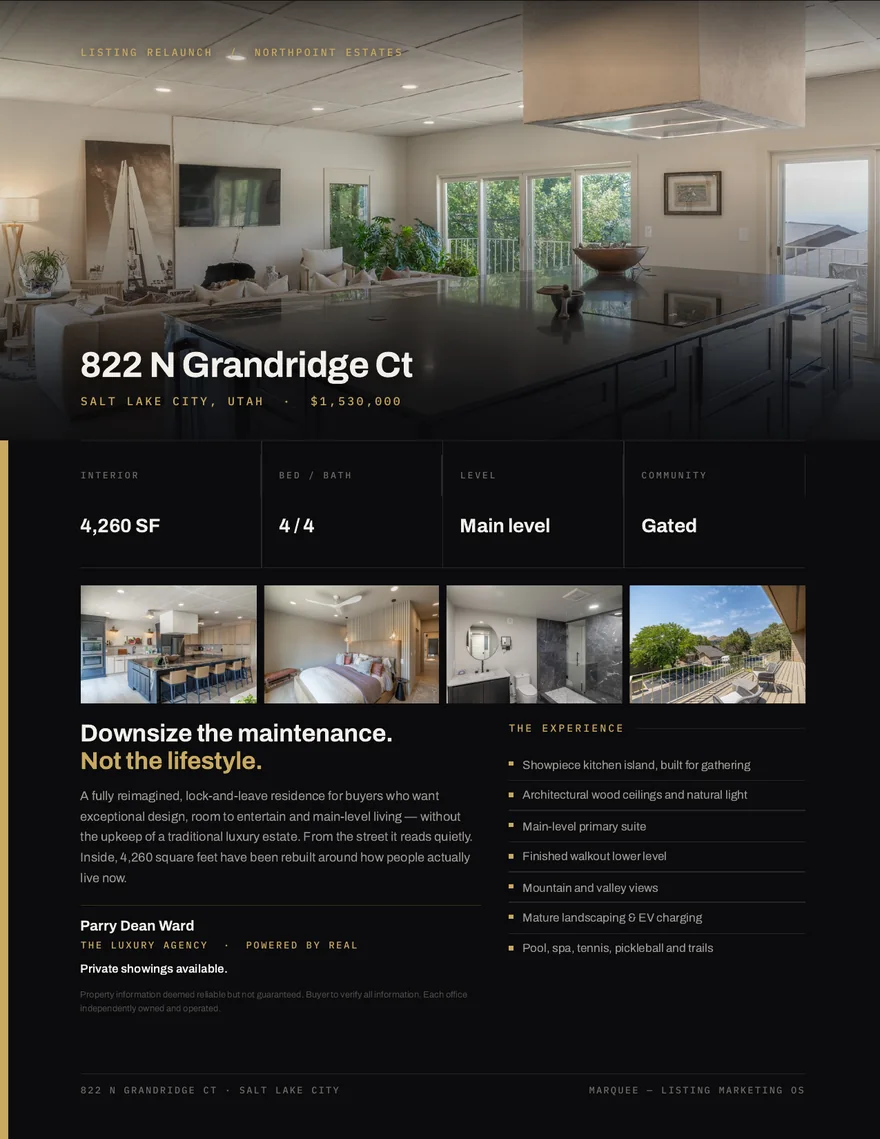
One sheet, built to survive the open-house table. Full-bleed photography from the shoot, the facts a buyer actually asks for, the positioning line carried through from the packet, and nothing borrowed from a listing-sheet screenshot.
Printed at letter, designed for the same dark, restrained look as everything else in the campaign — so a buyer who saw the post recognises the flyer.
Open the flyer →These are the delivered files, not mockups of them. Every piece is built on a single photograph from the shoot, art-directed, captioned, and sequenced so the campaign builds an argument across thirty days instead of repeating one.


The three pieces that decide whether the campaign turns into conversations — and the three most agents never get around to making.
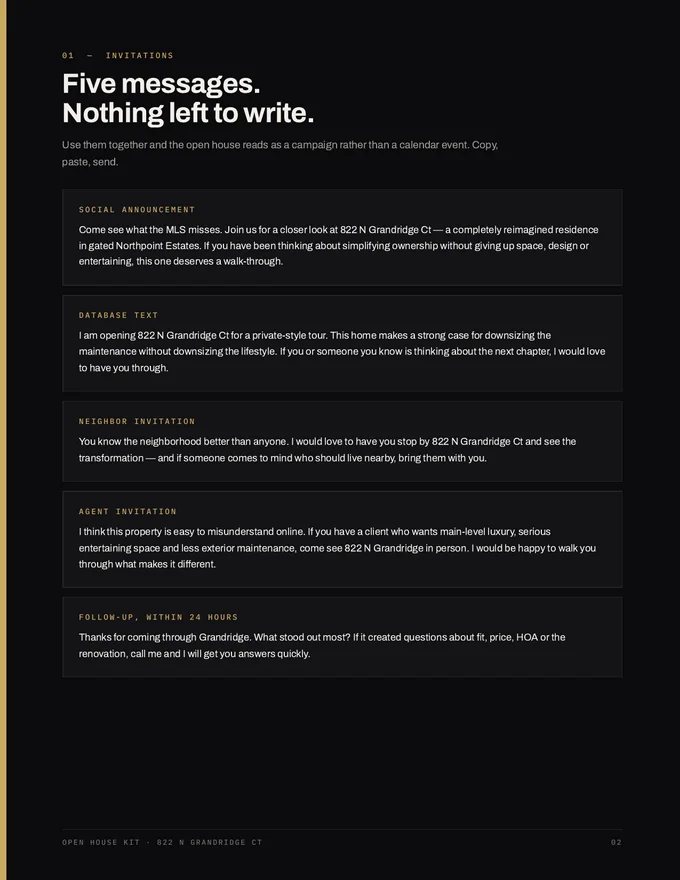
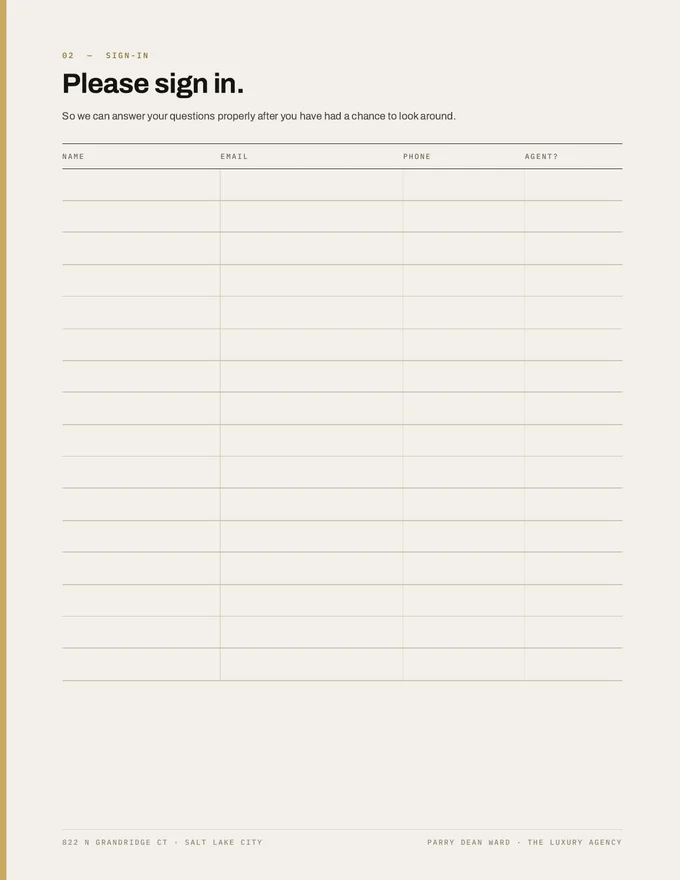
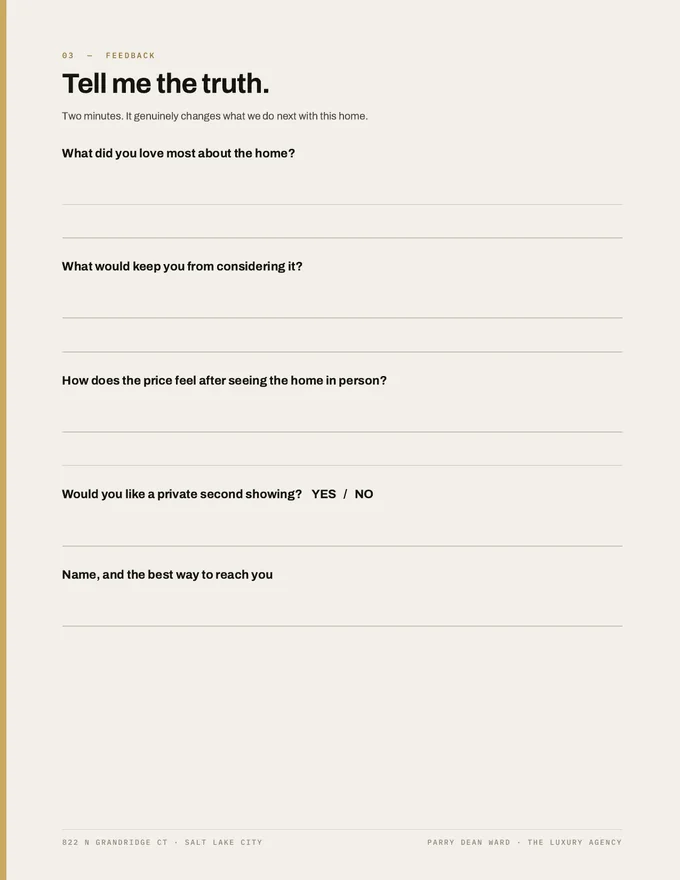
A printed welcome sign, five invitations already written, and a sign-in and feedback sheet on a light ground so a pen actually shows. Same design, made to be used.
Open the kit →
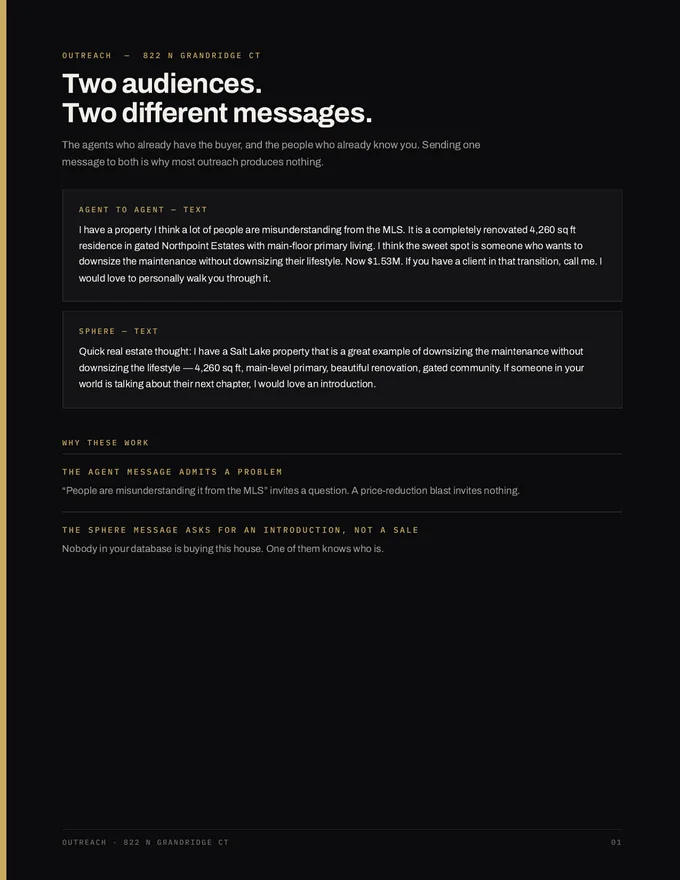
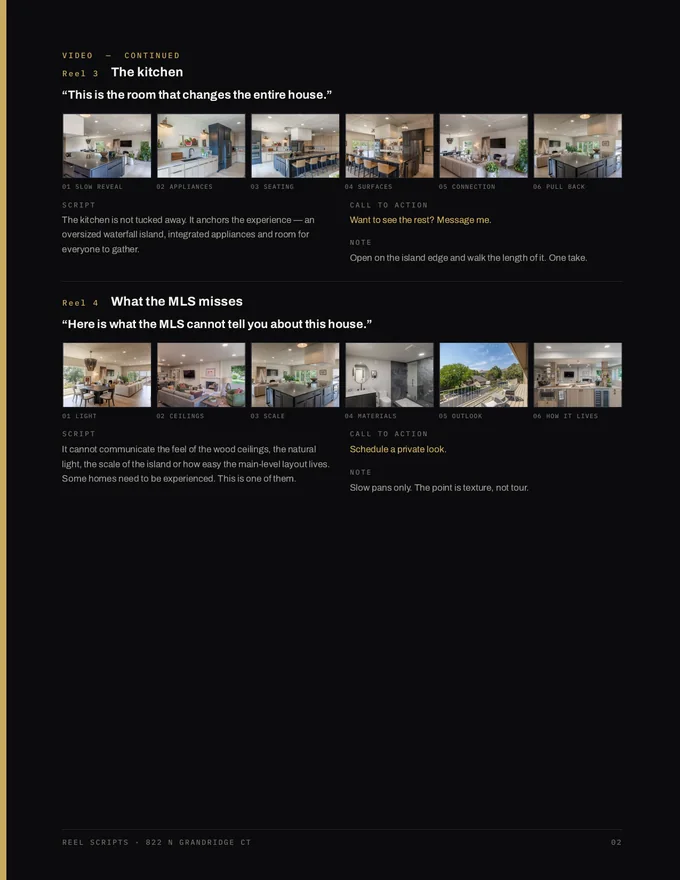
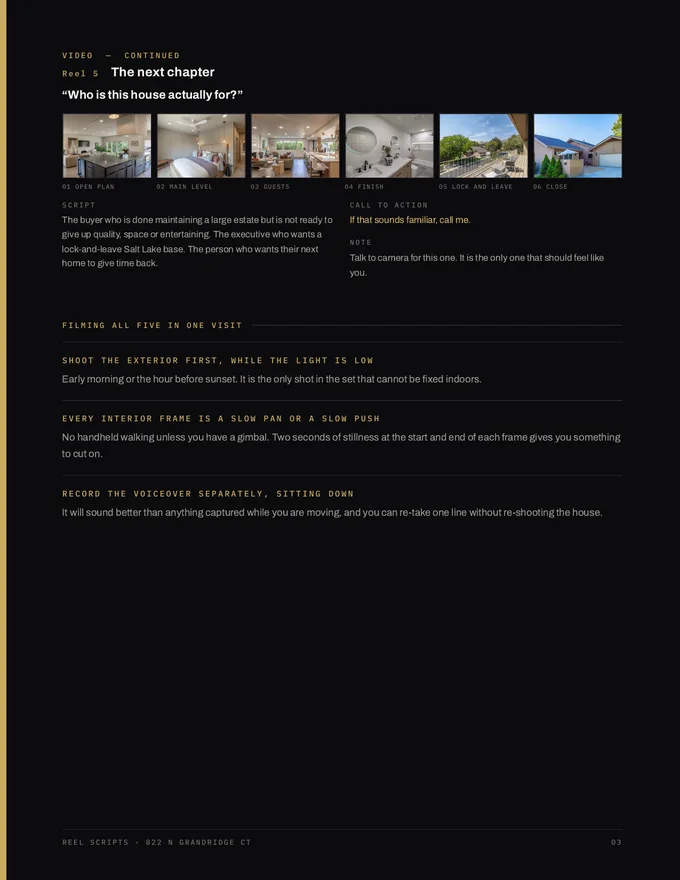
Hook, script, call to action and a six-frame storyboard built from the shoot — so you point a phone at the frame you are looking at. All five film in one visit.
Open the scripts →
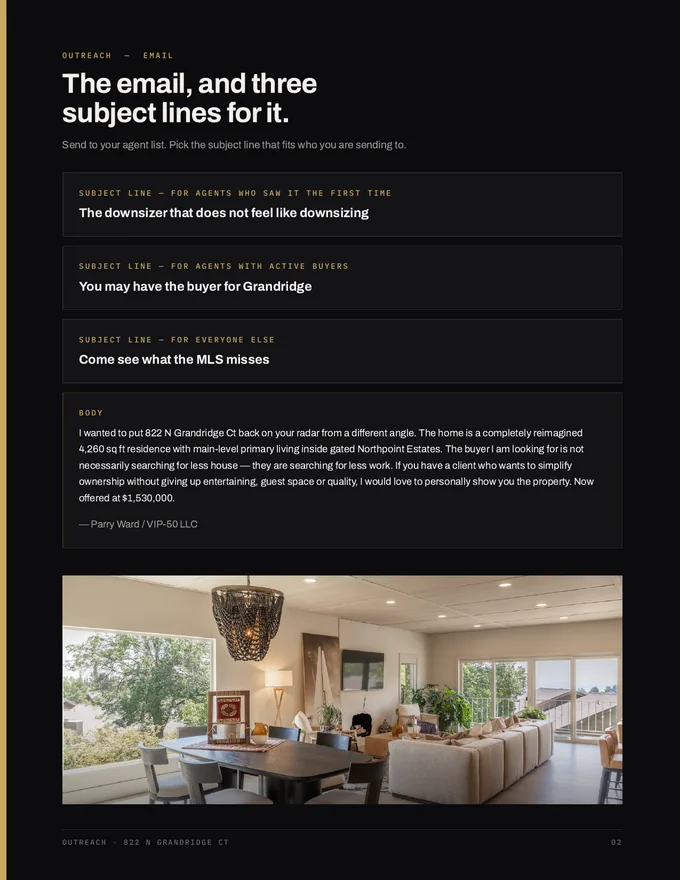
Two texts written for two different audiences, an email with three subject lines, and a note on why each one is built the way it is. Copy, paste, send.
Open the outreach →The reason campaigns die is that nobody decides what happens on day 17. Every day has an instruction. Four of the seven are shown per week.
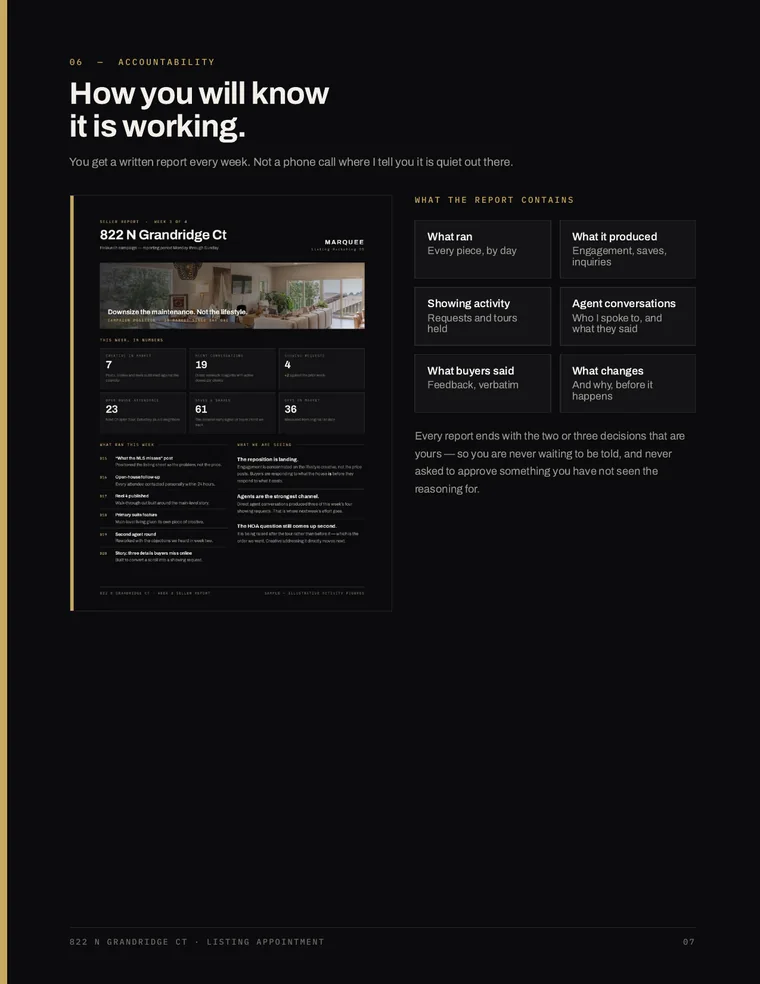
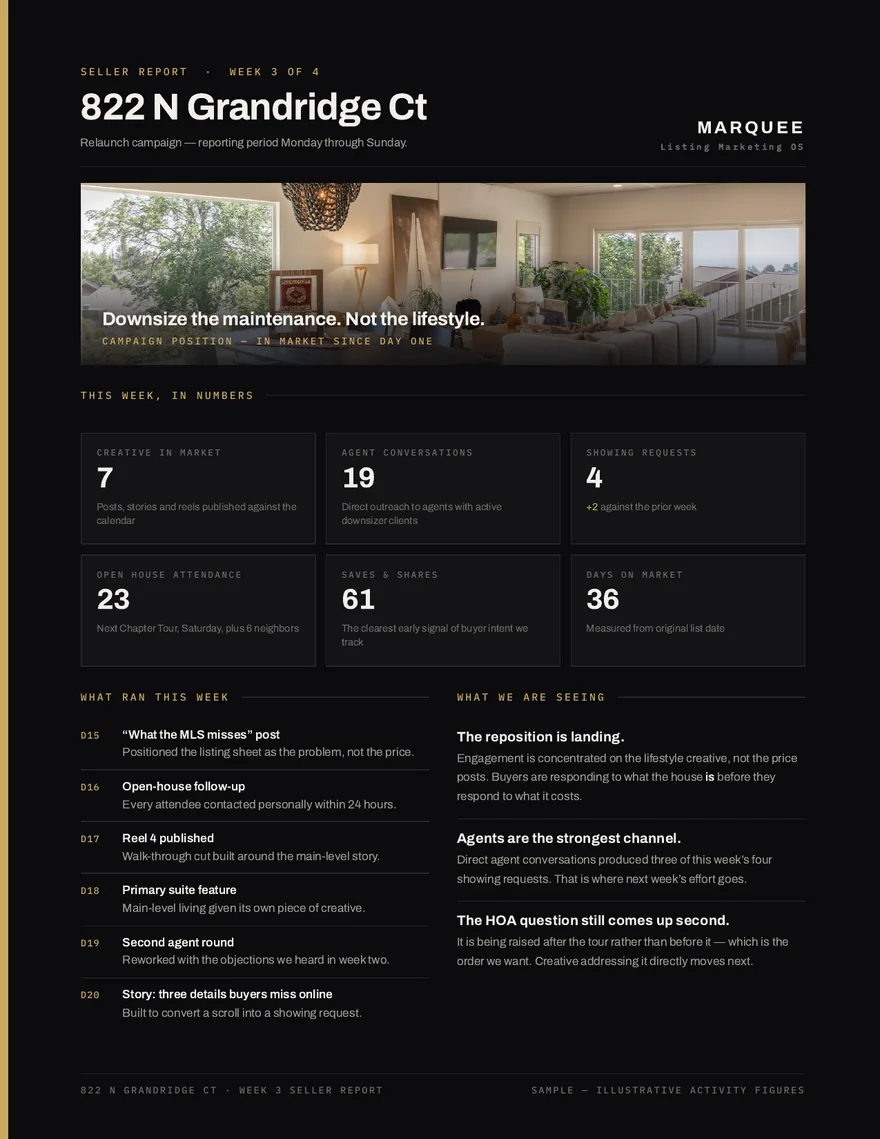
Every week the seller gets a report: what ran, what it produced, what buyers and agents actually said, and what changes because of it — ending in the two or three decisions that are theirs to make. It is the difference between a seller who wonders what you are doing and a seller who renews.
Shown with representative activity figures. On a live campaign the numbers are yours — pulled from what actually ran that week.
Open the report →You send an address and what you know about the seller. That is the whole of your involvement until the package is in front of you for approval.
Submit the address. No brief to write, no assets to gather, no calls to schedule.
From the form to the finished package, ready to present.
Per campaign. Not drafts, not templates — the files themselves.
A calendar with an instruction on every day, not a blank week three.
The average real estate marketing coordinator in the United States earns $56,336 a year. That is what it costs before they have designed anything, and before you have written the brief that tells them what to make.
US average, Salary.com — real estate marketing coordinator.
Everything on this page, per listing, finished. The first one is free so you can judge it against your own work rather than against a promise.
One free run per agent. No card to start.
The comparison is not really price, though. A coordinator produces what you brief them to produce. Nobody on this page was briefed — the positioning, the buyer, the argument and the sequence arrived with the files.
Marquee builds the seller presentation package you take to the appointment — the one that wins you the listing — free, for one property. No card. If it wins you the listing and you want the campaign that follows, that is when you pay.